WinHex
WinHex is a sophisticated hexadecimal editor developed by the German company X-Ways Software. It also includes tools for editing disks/memory, recovering data, and conducting computer forensics analyses. Essentially, WinHex functions as a universal hexadecimal editor, making it particularly useful in the field of computer forensics.
Introduction
WinHex is a sophisticated hexadecimal editor developed by the German company X-Ways Software. It also includes tools for editing disks/memory, data recovery, and computer forensics.
Essentially, WinHex is a versatile hexadecimal editor that is particularly useful in fields such as computer forensics, data recovery, low-level data processing, and IT security.
For ordinary users, we primarily use it for data recovery – for example, to retrieve deleted files or lost data from hard drives with damaged file systems or from digital camera cards.
Main functions of the product
WinHex boasts a wealth of powerful and professional features, which mainly include:
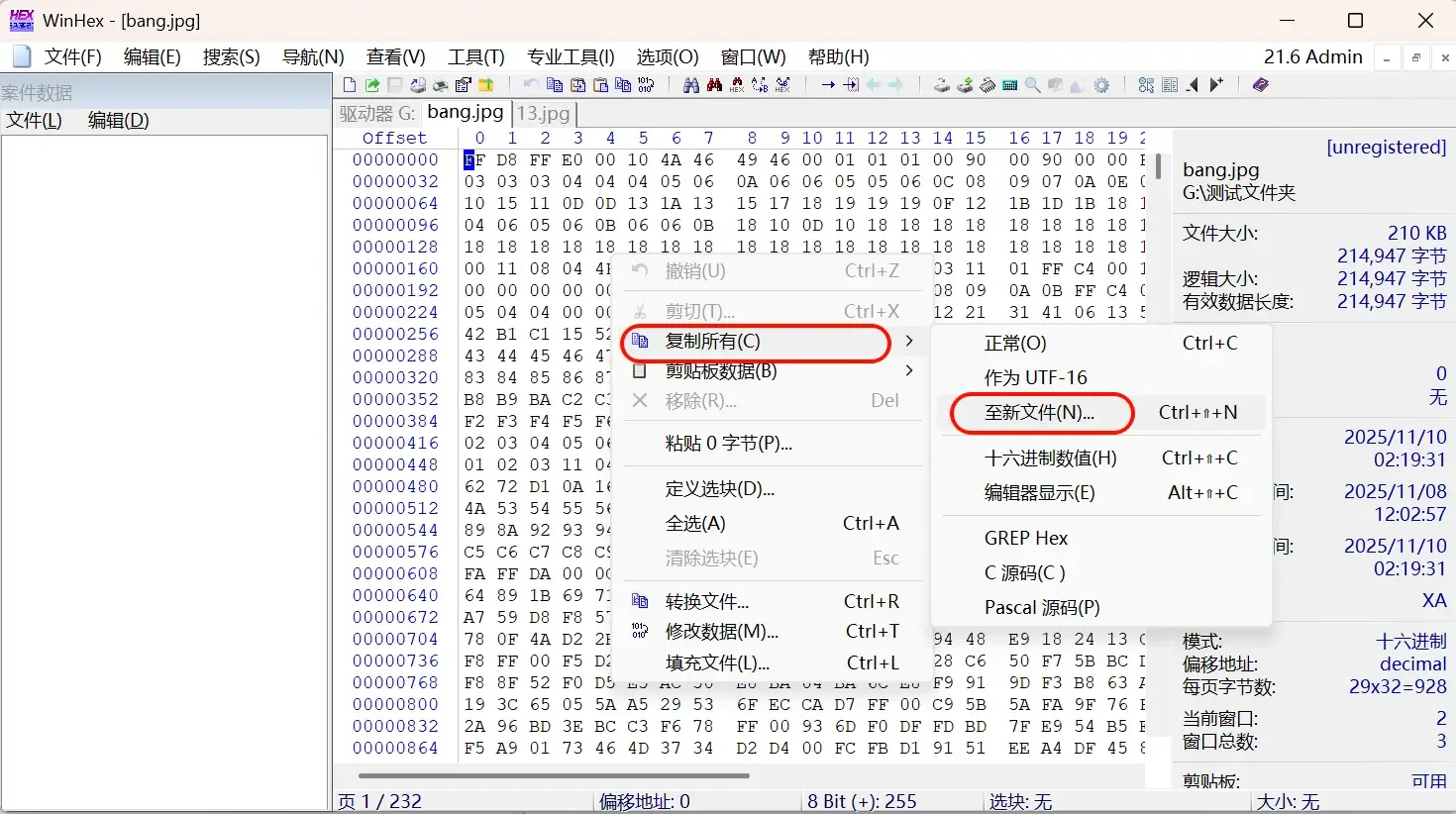
- Hexadecimal/ASCII Editor:Quickly open and edit files of any size, with support for both hexadecimal and ASCII view modes.
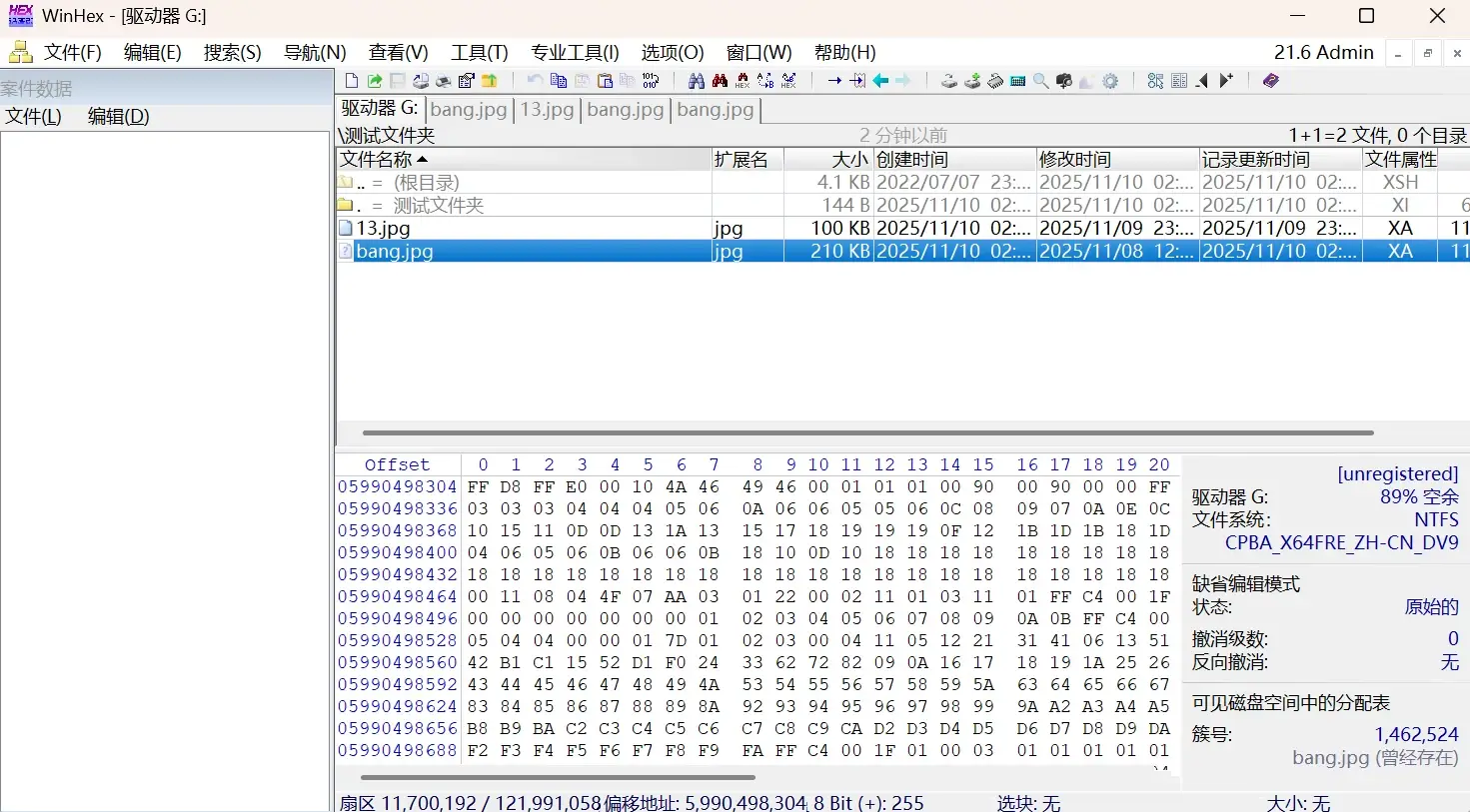
- Disk Editing:Provide direct access to and allow editing of physical disks, logical drives, RAID systems, floppy disks, CD-ROMs, DVDs, and ZIP drives, among others.
- Data recovery:Robust file recovery capabilities, including the ability to restore damaged partitions and file systems, as well as data backup via the “cloning” function.
- Data interpretation:It comes with a variety of data type templates, which enable the easy interpretation of raw binary data as integers, floating-point numbers, dates and times, etc.
- RAM Editor:It is possible to edit and analyze the memory (RAM) of processes that are currently running.
- Secure deletion:Thoroughly erase all data from files or disks to ensure that no sensitive information can be recovered.
- Data encryption/decryption:Supports a variety of encryption algorithms.
- Analysis tools:Functions such as file comparison, calculation of checksums and hash values (e.g., MD5, SHA-1), are used to verify the integrity of data.